- - -
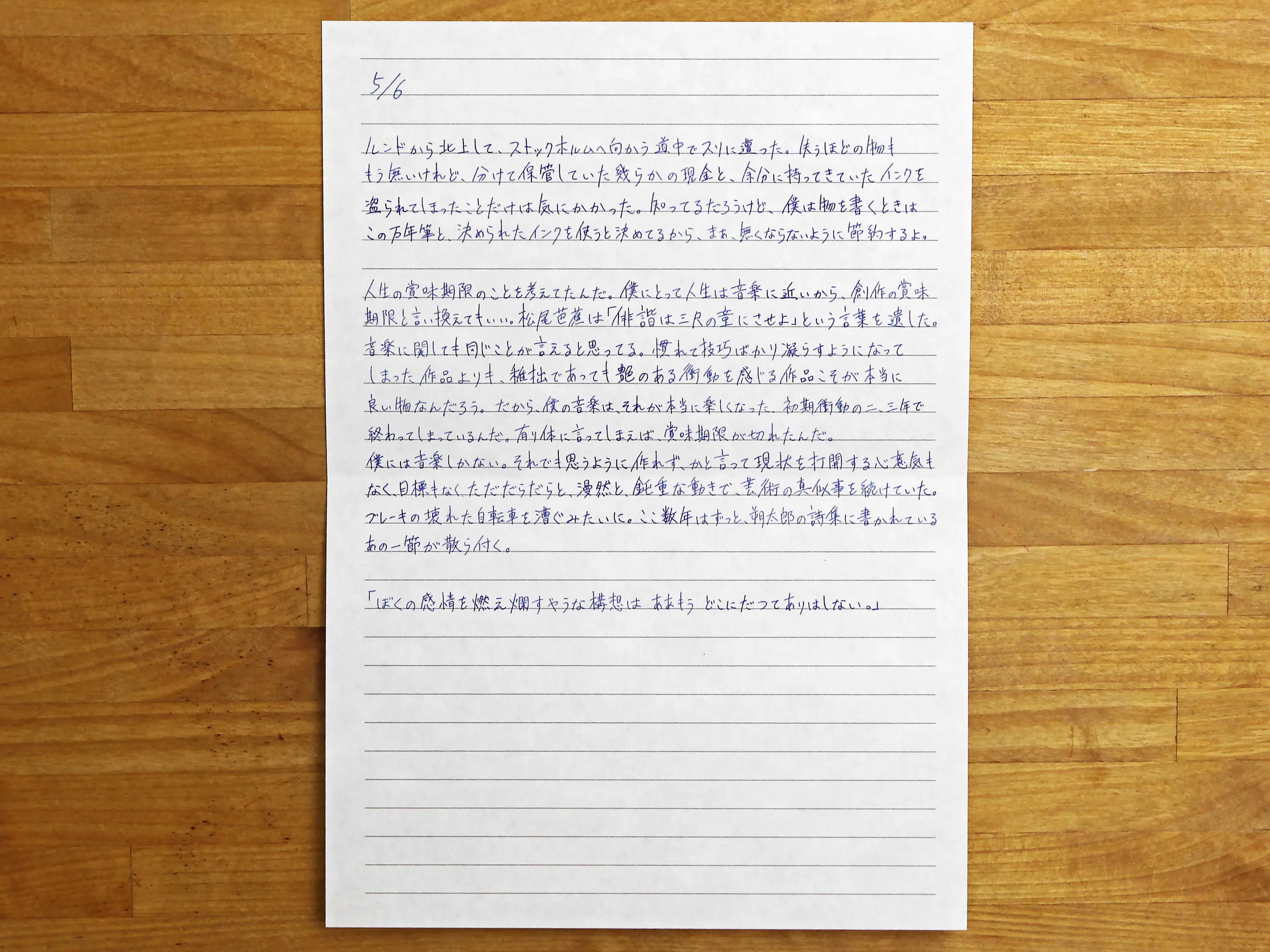
ルンドから北上して、ストックホルムへ向かう道中でスリに逢った。失うほどの物ももう無いけれど、分けて保管していた幾らかの現金と、余分に持ってきていたインクを盗られてしまったことだけは気にかかった。知ってるだろうけど、僕は物を書くときはこの万年筆と、決められたインクを使うと決めてるから、まぁ、無くならないように節約するよ。
人生の賞味期限のことを考えてたんだ。僕にとって人生は音楽に近いから、創作の賞味期限と言い換えてもいい。松尾芭蕉は「俳諧は三尺の童にさせよ」という言葉を遺した。音楽に関しても同じことが言えると思ってる。慣れて技巧ばかり凝らすようになってしまった作品よりも、稚拙であっても艶のある衝動を感じる作品こそが本当に良い物なんだろう。だから、僕の音楽は、それが本当に楽しくなった、初期衝動のニ、三年で終わってしまっているんだ。有り体に言ってしまえば、賞味期限が切れたんだ。
僕には音楽しかない。それでも思うように作れず、かと言って現状を打開する心意気もなく、目標もなく、ただだらだらと、漫然と、鈍重な動きで、芸術の真似事を続けていた。ブレーキの壊れた自転車を漕ぐみたいに。ここ数年はずっと、朔太郎の詩集に書かれているあの一節が散ら付く。
「ぼくの感情を燃え爛すやうな構想は ああもう どこにだつてありはしない。」
On the road north out of Lund, while I was on my way to Stockholm, I was pickpocketed. I don't have anything anymore that could be considered a loss, but if nothing else, having the portion of cash that I'd had packed away and the extra ink I'd brought with me taken does weigh heavily on my mind. Maybe you already know this, but I'm set on using this fountain pen and a specific ink when I write, so, well, I suppose I'll just use them sparingly so as not to run out.
I've been thinking about the best-by date of a human life. For me, life is something close to music, so you could also call it the best-by date of creative work. Matsuo Bashō left us these words: "When it comes to poetry, let the children write"2. I think you could say the same thing with relation to music. Rather than a practiced work, a thing reliant only on technique and polish, wouldn't a work be better if it could still captivate despite its clumsiness? So, it was the beginner's impulsiveness that made my music fun for me, and within 2 or 3 years, it was over. To put it bluntly, it reached its best-by date.
I have nothing but music. And still I can't make it how I want, to say nothing of how I don't have it in me to break out of my current situation, how I have no goals, how I just keep going along at this imitation of art, endlessly, aimlessly, sluggishly. Like trying to pedal a bike whose brakes have given out. These past few years, that one line from Sakutarou's collected poems keeps flitting in and out of my mind:
"A concept that could inflame my emotions - well - it's nowhere to be found." 3
- - -
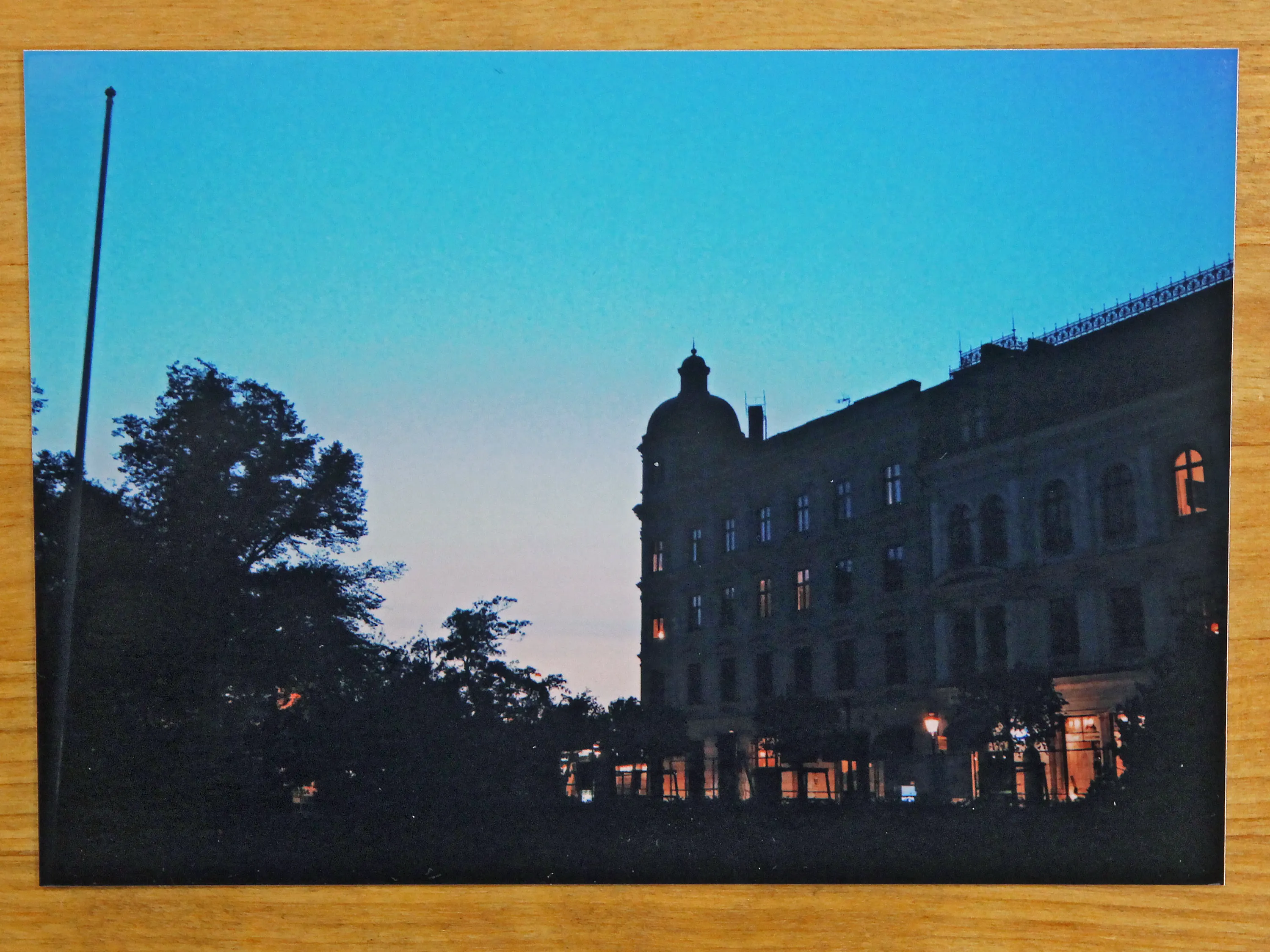
<--- [7/1] Like the Night (夜紛い)
- - -
Show/hide footnotes
1 All Saints Church. Opened in 1891, it remains the 2nd tallest building in the city of Lund, Sweden.
2 Lit. "Concerning haikai, let the three foot tall child write". The following line is quoted as, "It is the verses of beginners that are most promising (初心の句こそ頼もしけれ)". This quote is extremely well-known in Japan, generally interpreted as an admonition to approach the world with childlike honesty and wonder when composing poetry.
Haikai is a collective term for many different types of "comic" or "low" verse, including haiku.
3 These are the final lines of the poem 惡い季節 (warui kisetsu, "Bad Season") by Hagiwara Sakutarou. The "bad season" in question is winter, depicted in the poem as a time of aging, decay, poverty, and stagnation, where everything is worn and pale. Stale, outdated traditions and ways of thinking dominate, and new artistic ideas and young, burning passions can't come into existence.
Sakutarou was a highly influential free verse poet who wrote in the 1920s and 30s. Most of his poetry has only been translated into English once, in Hiroaki Sato's volume "Howling at the Moon" (1978). I didn't particularly care for that translation, so I've retranslated the line myself here.